
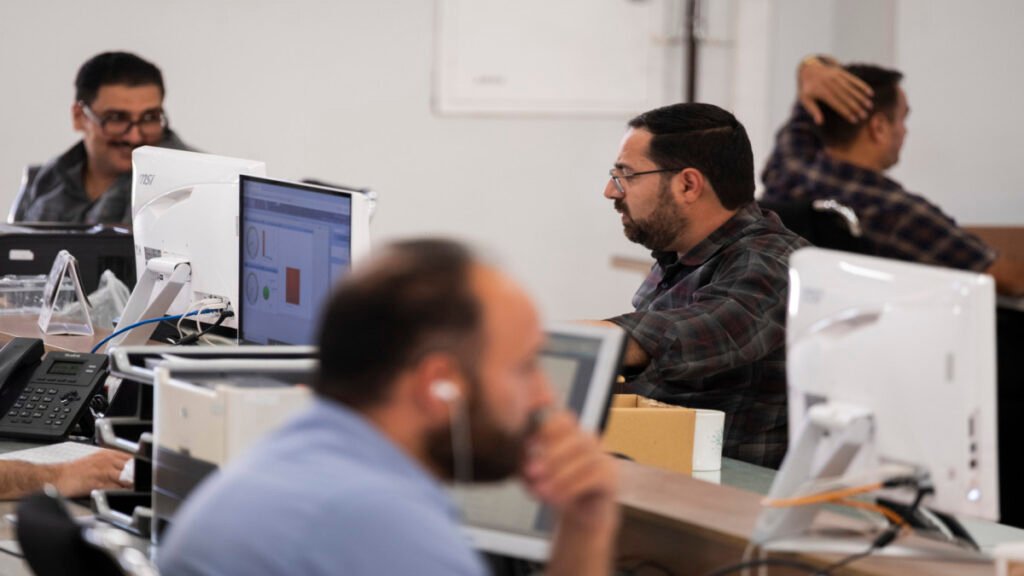
Artificial intelligence is rapidly reshaping the modern workplace. It promises sharper productivity, better decision making, and even improved employee well-being. But a more complicated question is emerging.
How much visibility into employees’ lives is too much?
From automated performance tracking to AI-driven wellness platforms, employers now have access to insights that were once impossible to measure. The shift is not just about efficiency. It is about understanding behavior, habits, and even mental health signals in real time.
That evolution is forcing businesses and workers alike to rethink the boundaries between support and surveillance.
AI promises smarter employee benefits and burnout detection
At the heart of this transformation is data. AI systems rely on large volumes of contextual information to generate insights, and the workplace has become a rich source of that data.
That access opens the door to meaningful improvements. Companies can identify early signs of burnout, flag disengagement before it leads to turnover, and design benefits programs that are actually used rather than ignored.
More AI Stocks:
- Morgan Stanley sets jaw-dropping Micron price target after event
- Bank of America updates Palantir stock forecast after private meeting
- Morgan Stanley drops eye-popping Broadcom price target
This is especially relevant as workplace stress becomes more visible.
Burnout is no longer a theoretical concern. It is showing up in productivity, absenteeism, and long-term health outcomes.
What the burnout data show
The data makes the case for urgency. Recent research paints a concerning picture of where things stand.
- More than half of U.S. workers reported experiencing burnout in 2025, according to Eagle Hill Consulting.
- 77% of U.K. employees experienced at least one symptom of burnout in the past year, with 23% of sick leave attributed to burnout-related issues, per a Yulife survey.
- Burnout costs businesses an estimated $322 billion annually in lost productivity, according to research compiled from McKinsey, Deloitte, and Gallup.
AI is enabling a level of workplace context that simply did not exist before, says Tal Gilbert, CEO of Yulife, an AI-forward insurance and employee benefits platform. “Employers and insurers have never been able to access that data previously,” he told TheStreet.
In theory, this marks a shift from reactive to proactive workplace management. Instead of responding to crises, companies can anticipate them.
Where worker privacy concerns begin
Yet the same capabilities that make AI attractive also make it controversial. When systems begin to infer how employees feel or how close they might be to burnout, the line between support and intrusion becomes blurred.
This is particularly sensitive when it comes to mental health. While early detection can be beneficial, it also raises concerns about how that information might be interpreted or used internally.
Would an employee flagged as “at risk” be supported or quietly sidelined? Could such insights influence promotions, compensation, or job security? These are the questions that make workers wary, even when the stated goal is well-being.
The push for privacy-first AI-fueled workplace data
To address these concerns, many companies are emphasizing privacy-first approaches. Instead of tracking individuals, some systems aggregate data to identify trends at the team or organizational level.
Gilbert said that distinction is central to how Yulife is designed. “It’s all at an aggregate level,” he explained.
“We’re talking about whether there are employer level risks of burnout, stress, and related issues that they can intervene around, rather than anything at an individual level.”
That approach reflects a broader effort to build trust. If employees feel they are being watched too closely, adoption of AI tools can quickly backfire.
Nikoubazl/Getty Images
Transparency may matter more than technology
Still, aggregation alone does not fully resolve the tension. Even anonymized data can feel invasive if employees do not understand what is being collected or how it is used.
Transparency is becoming just as important as privacy itself. Workers want clarity around what data is captured, why it is analyzed, and what safeguards are in place.
There is also a cultural dimension. In some workplaces, employees may welcome AI-driven insights if they lead to better support or flexibility. In others, the same tools may be viewed as a step toward constant monitoring.
The future of work hinges on trust
The stakes are rising as AI becomes more embedded in everyday work. These systems are not only analyzing behavior but also shaping it through recommendations and nudges.
For employers, the challenge is balance. AI offers a chance to make workplaces more responsive and humane, particularly around mental health. But that promise depends entirely on implementation.
Clear policies, strong data governance, and open communication will be critical. Companies that position AI as a tool for empowerment are more likely to succeed. Those that drift into surveillance risk eroding the trust they depend on.
The future of work will likely be defined by this trade-off. AI can provide unprecedented insight into how people perform and feel. The question is whether that insight will be used to support employees or simply to monitor them more closely.
Related: Vanguard says agentic AI will be the big unlock for investors