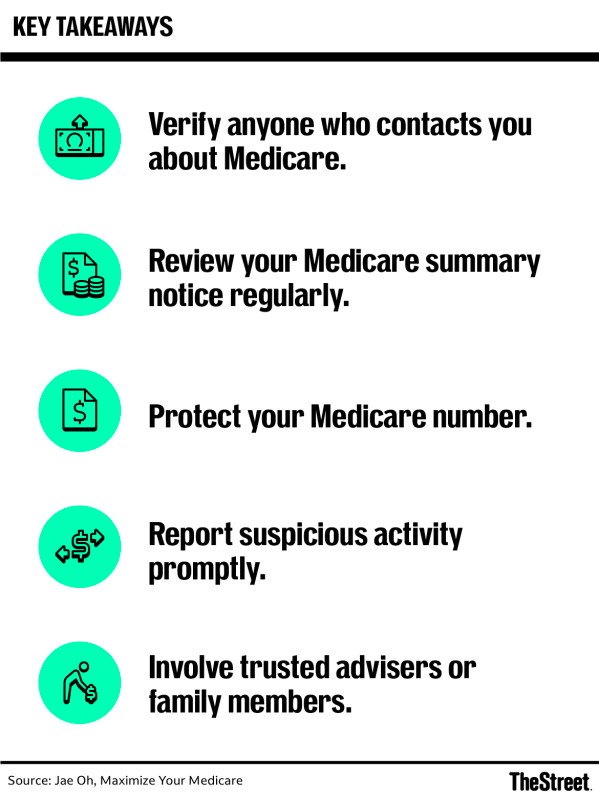
Medicare beneficiaries are facing heightened risks from fraud schemes, and federal regulators are urging both institutions and individuals to take a more active role in prevention.
In a recent interview, Jae Oh, author of “Maximize Your Medicare,” noted that a recent advisory from the Financial Crimes Enforcement Network underscores a critical point: Fraud often begins with stolen personal information, and beneficiaries themselves are the first line of defense.
The warning comes at a time when health care fraud is becoming more sophisticated, often involving unauthorized claims and identity theft. For households, especially retirees, the financial and administrative consequences can be significant.
Below is a transcript of the interview with Oh, edited for brevity and clarity.
Medicare fraud risks: what beneficiaries need to know
Robert Powell: The Financial Crimes Enforcement Network recently issued an advisory reminding consumers that fraud often begins with stolen personal information and unauthorized claims. While financial institutions are being asked to detect suspicious money flows, beneficiaries remain the first line of defense.
Joining me to discuss this is Jae Oh, author of “Maximize Your Medicare.” Jae, welcome.
Jae Oh: Thanks for having me, Bob.
Start with basic verification
Robert Powell: Where should people begin when thinking about the FinCEN advisory and protecting themselves?
Jae Oh: First, it is important to understand that regulations are designed in the consumer’s favor. For licensed insurance professionals, for example, each of us has a unique National Producer Number, or NPN.
If someone contacts you and makes claims such as, “You could lose your Medicare Advantage benefits today,” that is not accurate. A simple step is to ask for that person’s NPN. If they are unwilling to provide it, that should tell you everything you need to know.
In addition, no one from Social Security or Medicare will reach out to ask for your private information. Today, even logging into Medicare.gov requires two-factor authentication. That alone should signal that unsolicited requests for personal data are not legitimate.
Verify credentials and licensing
Robert Powell: Even if someone provides an NPN, it makes sense to verify that it actually belongs to them, correct?
Jae Oh: That is absolutely correct. The NPN is a federal identifier, but insurance is regulated at the state level. That means a licensed professional will also have state-specific identifiers. Consumers should verify both when possible.
Why reviewing your Medicare summary notice matters
Robert Powell: Another common recommendation is to review your Medicare summary notice, or MSN. What should people be looking for?
Jae Oh: The MSN is not really a summary. It is a detailed report of services billed to Medicare. It helps you track whether you have met your Part B deductible and understand what services were provided.
The key issue is accuracy. Errors can occur. Someone may enter the wrong billing code or, in some cases, services may be billed that were never performed. That is why reviewing the MSN is critical.
Consumers should confirm that services listed were actually received and that providers billed appropriately. This applies to both Original Medicare and Medicare Advantage.
Watch for Medicare billing errors and suspicious activity
Robert Powell: So beneficiaries should not simply discard these notices. They should look for duplicate charges or unfamiliar providers.
Jae Oh: Exactly. For Medicare Advantage enrollees, discrepancies may show up quickly because of copays. But for those with Medigap, it can be less obvious, since out-of-pocket costs may be minimal or zero after meeting the deductible.
Even if there is no immediate financial impact, improper billing can still drive unnecessary costs within the Medicare system. While most cases have reasonable explanations, consumers should still review these documents carefully.
Protect your Medicare number
Robert Powell: Another key point is safeguarding your Medicare number.
Jae Oh: Yes. Your Medicare number should be treated as highly confidential. It is now a complex combination of letters and numbers, not your Social Security number, but it is still sensitive information.
There is no reason to share it with anyone who does not need it. In many cases, providers can identify you through your plan cards, such as Medicare Advantage, Medigap, or Part D cards, without requiring your Medicare ID.
What to do if you suspect Medicare fraud
Robert Powell: If someone believes they have been scammed, what steps should they take?
Jae Oh: There are reporting mechanisms within the Medicare system, including options to report concerns anonymously. The infrastructure to protect consumers is already in place, and people should use it.
The role of financial advisers
Robert Powell: Financial advisers may also play a role in helping clients avoid scams.
Jae Oh: They should. Health care costs are a top concern for households. When someone becomes ill, they are not thinking about their portfolio. They are focused on deductibles, copays and coverage.
Advisers who help reduce uncertainty around health care planning provide real value.
Stay informed through official channels
Robert Powell: What about staying informed through official updates?
Jae Oh: Signing up for updates from Medicare.gov is a good starting point. The information is relevant and not overwhelming. It helps consumers stay aware of changes and potential risks.
The role of family and caregivers
Robert Powell: It also seems that adult children may need to play a more active role.
Jae Oh: That is absolutely the case. Many families are part of the “sandwich generation,” balancing support for children and aging parents.
Cognitive decline can affect financial decision-making over time. That makes it important for trusted family members or friends to help navigate Medicare and related financial decisions.
Related: Why retirees are eyeing Kentucky right now