
We are currently facing a market that feels increasingly unstable. And honestly, in all my years of trading and watching the markets, this trading environment is something else. But why? And why now?
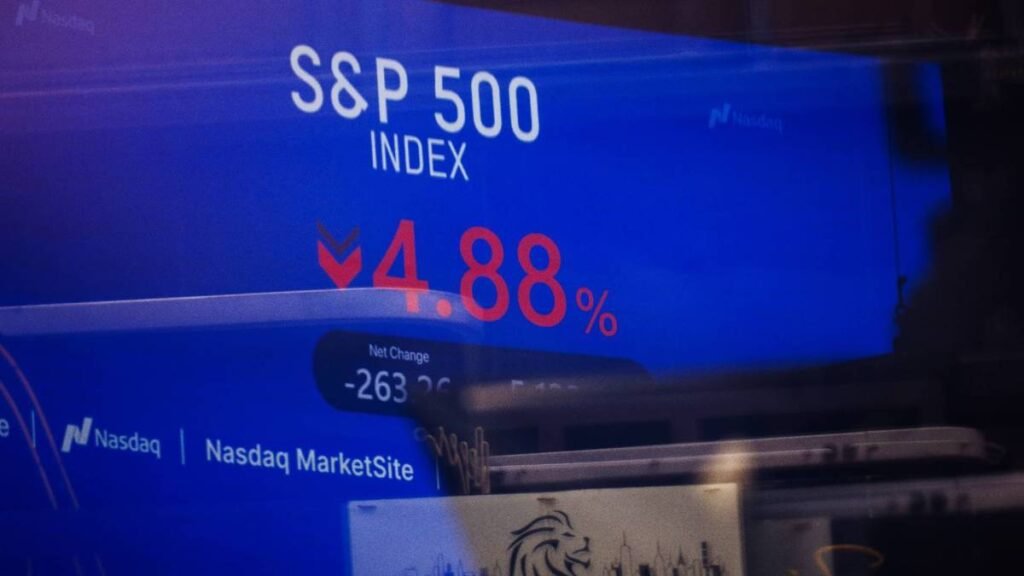
Rising geopolitical tensions, a steady pullback in equities, and surging oil prices have created a wave of uncertainty across Wall Street. The S&P 500 has now logged multiple weeks of losses, leaving both long-term investors and day traders wondering just how much further stocks could fall.
But interestingly, not everyone is backing down. Citigroup (Citi) is holding firm on its outlook, even as risks pile up, amid the Middle East drama and the current market pullback.
The bank is sticking with a bold year-end target that implies a sharp rebound from current levels.
So what exactly does Citi see that the market doesn’t?
Citi holds S&P 500 target despite rising geopolitical risks
In a recent note to clients, Citi reaffirmed its base-case target of 7,700 for the S&P 500.
That’s a notable call, especially with the index currently trading at 6,368 as of the March 27 close, and after a difficult stretch. To get there, stocks would need to rally roughly 20% from current levels.
Citi’s outlook is built on projected earnings of about $320 per share, a figure the bank now suggests could actually be conservative given recent earnings momentum.
Related: Citi analysts see big opportunity in GM’s $6 billion crisis
The firm also outlined two alternative scenarios:
- Bull case: 8,300, driven by stronger earnings and valuation expansion
- Bear case: 5,700, reflecting weaker fundamentals and falling multiples
Despite mounting concerns tied to the Iran conflict and broader macro uncertainty, Citi made it clear:
“We maintain our full-year targets for now.”
That stance stands out, especially as many investors grow more cautious.
Michael Nagle/Bloomberg via Getty Images
Market volatility rises as oil surges and war weighs on stocks
The backdrop for Citi’s call is far from calm. U.S. stocks have just closed out their fifth straight losing week, with the S&P 500 down sharply from its January highs. The index is now roughly 8-9% below its peak, highlighting the growing pressure on equities.
The broader market tells a similar story. As of March 27th, the market closes for the day and week was as follows:
- Dow Jones Industrial Average dropped 1.7%, shedding 793.47 points, closing at $45,166.64
- Nasdaq Composite fell more than 2%, dropping 459.72 points, closing at $20,948.36
- Big Tech names like AMZN and META led declines too, dropping 4.02% each.
At the center of the volatility is the escalating Middle East conflict.
After markets closed, Donald Trump said he would pause energy-related strikes on Iran temporarily, offering a brief moment of relief. But uncertainty remains high, with reports suggesting potential troop deployments and continued military escalation.
That uncertainty is feeding directly into energy markets.
More Wall Street
- Billionaire Dalio sends 2-words on Fed pick Warsh
- Top analyst bets these stocks will boost your portfolio in 2026
- Bank of America sends quiet warning to stock market investors
As per Trading Economics, Oil prices have surged sharply, with Brent crude oil climbing above $111 per barrel on Friday. That’s its highest level since June 2022. Raising concerns about a new wave of inflation.
And that’s where the real risk lies.
Higher energy prices could ripple through the economy, increasing costs for businesses and consumers alike, potentially slowing growth and weighing on corporate earnings.
Why Citi still sees upside for stocks
So why is Citi staying optimistic? It comes down to one key factor: earnings resilience.
Despite the market pullback, the bank believes corporate profits remain strong enough to support higher stock prices over time.
Technology continues to lead the way, with earnings estimates for the sector rising significantly in 2026. Mega-cap stocks still play a major role, but there’s a shift happening beneath the surface.
The broader market is starting to contribute more.
After emerging from an earnings slowdown, the “other 492” companies in the S&P 500 are now expected to deliver low double-digit growth. A sign that market breadth is improving.
That matters because rallies driven by more sectors tend to be more sustainable.
Citi also sees potential support from macro policy.
Its economists expect the Federal Reserve to cut interest rates multiple times this year. A move that could ease financial conditions and support equity valuations.
Still, risks remain. Citi flagged several threats to its “goldilocks” outlook:
- Prolonged Iran conflict
- Higher-for-longer oil prices
- AI disruption risks
- Private credit market stress
- Ongoing trade uncertainty
So, where does that leave you and me specifically? Citi’s message is clear: even if the path is volatile, the destination may still be higher.
But with markets under pressure and uncertainty rising, the real question becomes whether investors stay patient enough to see that upside play out, or get shaken out along the way.
Related: JPMorgan resets S&P 500 price target for rest of 2026