
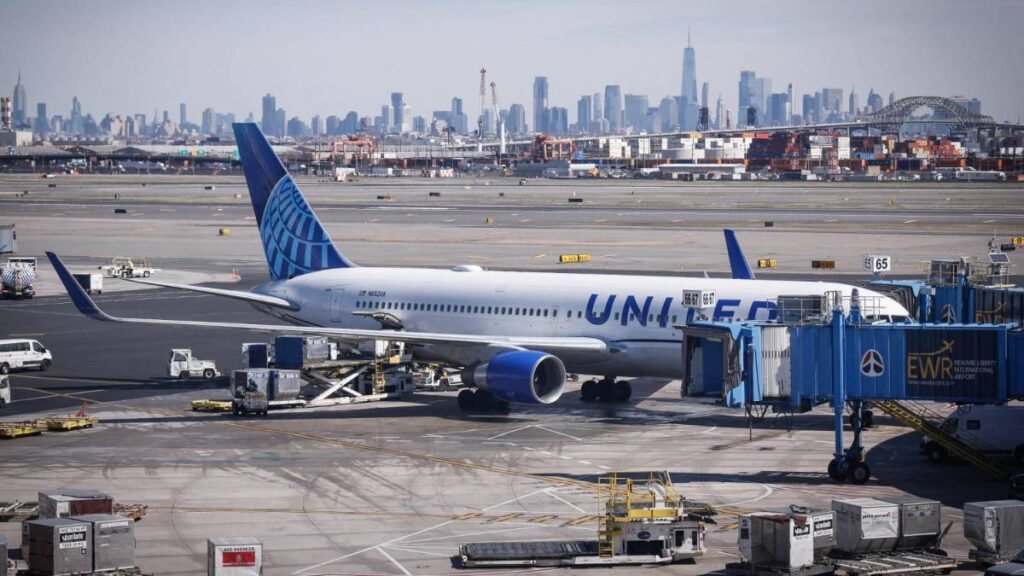
Flying is becoming more expensive day by day, and this time, travelers are feeling the impact right at check-in. Rising fuel costs are forcing airlines to make tough decisions, and United Airlines (UAL) is the latest to act. The 95-year-old Chicago-based carrier has increased its checked bag fees, signaling broader pricing pressure across the sector.
United Airlines operates an extensive domestic and international route network. That’s across the United States and to destinations on six continents.
The move comes as jet fuel prices have surged more than 80% since late February, following geopolitical tensions in the Middle East. That’s a reason to push airlines to protect margins.
For travelers, the change may seem small at first glance. But it reflects a bigger trend that could impact travelers’ budgets in the months ahead.
Kena betancur / AFP via Getty Images
United Airlines hikes checked bag fees as fuel costs rise
United Airlines (UAL) has raised its checked bag fees by $10, becoming the second major U.S. carrier in less than a week to make such a move, after JetBlue.
United Airlines now charges $45 for a first checked bag if prepaid, and $50 if purchased within 24 hours of departure. The updated pricing applies to most domestic routes and select international markets, including Mexico, Canada, and parts of Latin America.
Related: Jet fuel prices jumped 60 percent: Your next flight will cost more
The change takes effect for tickets purchased starting April 3, according to a company statement.
The decision highlights fuel costs as a growing monster challenge for airlines. Jet fuel, typically the second-largest expense after labor, has surged sharply in recent weeks. Prices in major hubs like Chicago, Houston, Los Angeles, and New York averaged $4 per gallon, up more than 80% since late February. That’s the highest since 2022, as per the Los Angeles Times.
JetBlue also raised its checked bag fees by as much as $9
United Airlines isn’t alone. JetBlue Airways (JBLU) recently made a similar move, increasing checked bag fees by up to $9 depending on booking timing. A sign that competitors may continue to follow.
So, in my opinion, this could just be the beginning of this.
More Airlines:
- American Air launching 15 new summer routes between U.S. cities
- Low-cost airline will launch new flight to South Korea from US
- American Airlines joins the Spirit Airlines bankruptcy case
The new fees went into effect on Monday, 30th March. For most domestic economy travelers, the first checked bag now costs $39, up from $35. During peak travel periods such as spring break in April, major holidays, and the summer, the fee rises to $49, up from $40, according to the airline.
“While we recognize that fee increases are never ideal, we take careful consideration to ensure these changes are implemented only when necessary,” JetBlue said, as per CNBC.
United said some customers can still check bags for free
Yes, there are still ways travelers can avoid the added cost. United said passengers holding eligible co-branded Chase credit cards, those with MileagePlus Premier status, customers in premium cabins, and active-duty military personnel are exempt from standard checked bag fees.
These benefits apply to United- and United Express-operated flights. Prepaying online also offers a small discount.
The airline industry faces rising costs as fuel prices climb
The recent fee hikes underscore a broader issue facing the airline industry: rapidly rising operating costs tied to fuel.
Prices have climbed sharply following the U.S.-Israel attacks on Iran, creating ripple effects across multiple sectors. Companies are increasingly passing those costs on to consumers.
More Travel:
- The world fires back on Trump’s new travel ban
- Low-cost airline adds 5 new flights to popular beach destinations
- American Air launching 15 new summer routes between U.S. cities
Even outside aviation, businesses are adjusting. Amazon, for example, recently introduced a 3.5% fuel and logistics surcharge for third-party sellers using its fulfillment network.
For airlines, the pressure is particularly intense. Fuel costs can swing dramatically and are difficult to hedge fully, making pricing adjustments one of the fastest ways to protect profitability.
As a result, ancillary fees like baggage charges are becoming an increasingly important revenue stream.
United’s Q4 revenue was the highest quarterly revenue in history
Despite rising costs, United Airlines has delivered strong financial and operational performance.
The 95-year-old carrier reported fourth-quarter revenue of $15.4 billion. The highest in its history, alongside diluted earnings per share of $3.19. For full-year 2025, United posted diluted EPS of $10.20, up 8% year-over-year.
Operationally, the airline carried a record 181 million passengers and maintained one of the lowest seat cancellation rates in its history. It also ranked No. 2 in on-time departures among major U.S. carriers.
Operationally, the company is also improving:
- Lowest seat cancellation rate in its history
- Over 5,000 daily flights during peak periods
- Expanded fleet with new and upgraded aircraft
- Average of 496,000 passengers per day throughout the year
United has continued investing heavily in its fleet and customer experience. In 2025, it added 82 new aircraft and upgraded 119 planes with its Signature Interior, now covering 68% of its narrowbody fleet. United has also focused heavily on customer experience. Upgrading interiors and investing in technology are some of the moves that have also helped boost brand loyalty.
Looking at performance, United Airlines shares have outperformed the broader S&P 500 across multiple timeframes. That’s including a 29% gain in one year and a three-year return exceeding 100%, as per Yahoo Finance.
This is why rising airline fees matter for travelers and investors
For travelers, the fee increase is a reminder that costs can add up quickly. The impact is immediate, too. Especially as airlines rely more on add-ons to boost revenue.
For investors, the move signals how airlines are navigating a volatile cost environment. Pricing power, cost control, and demand resilience will likely remain key themes for the sector. If fuel prices stay elevated, more airlines could follow with similar increases.
Related: Amazon makes new move into credit cards